
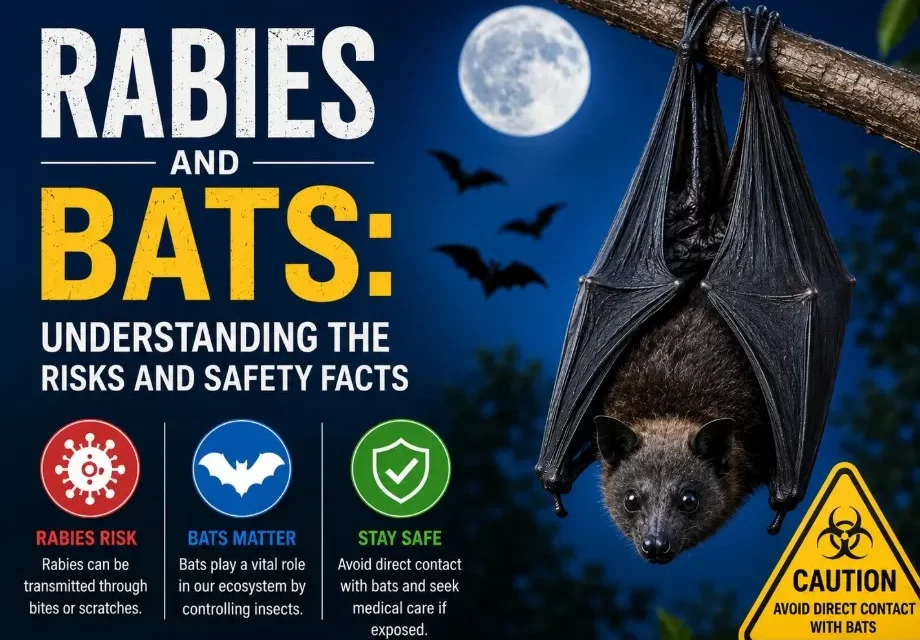
In the United States, bats are a vital part of our ecosystem, but they are also recognized as one of the primary carriers of the rabies virus. While the vast majority of bats do not carry the disease, it is critical to understand the facts to protect yourself, your family, and your pets.
Here is a comprehensive guide to identifying risks, recognizing potential exposure, and knowing exactly what to do if you encounter a bat.
1. Are Bats Truly “Riddled” with Rabies?
There is a common misconception that most bats have rabies. In reality, less than 1% of bats in the wild carry the rabies virus.
However, because bats are a leading source of domestically acquired human rabies cases in the U.S., public health officials emphasize caution. It is important to remember:
- You cannot get rabies just by seeing a bat in the wild, in a cave, or flying in the distance.
- You cannot get rabies from bat guano (feces), blood, or urine.
- The virus is transmitted only through direct contact with saliva or brain tissue, typically via a bite or scratch.
2. Signs of a Rabid Bat
You cannot determine if a bat has rabies just by looking at it—the only way to confirm it is through laboratory testing. However, be cautious if you observe “abnormal” behavior, such as:
- Daytime Activity: Bats are nocturnal. Seeing a bat active during the day is a red flag.
- Disorientation: A bat that is unable to fly, appears to be “stumbling,” or is grounded on the floor or lawn.
- Lack of Fear: A bat that is easily approached by humans or pets.
- Aggression: While rare, some rabid animals may display unusual aggression.
Rule of Thumb: If a bat is found in a place it shouldn’t be—like inside your living space—it should be treated as a potential health risk.
Also Read : – How to Cut Down on Germs at Home (Without Turning Into a Clean Freak)
3. What to Do If You Find a Bat Indoors
If you find a bat in your home, stay calm and follow these steps to minimize risk:
- Contain the Area: Close the door to the room and place a towel under the door to prevent the bat from escaping. Keep people and pets away.
- Call for Help: Contact your local animal control or health department. They have the equipment to capture the bat safely for testing.
- Do Not Handle: Never try to catch a bat with your bare hands. Always wear thick gloves and use a container or net if you absolutely must act, but professional removal is strongly recommended.
4. What Constitutes a “Rabies Exposure”?
You are considered at risk if you have had direct contact with a bat’s saliva or nervous tissue. This includes:
- Being bitten or scratched.
- Having bat saliva get into your eyes, nose, mouth, or an open wound.
- The “Sleeping” Scenario: If you wake up and find a bat in your bedroom, or if you find a bat in a room with an unattended child or a person unable to communicate (such as someone intoxicated or mentally impaired), assume exposure. Seek medical advice immediately. Because bat teeth are microscopic, you may not feel or see a bite mark.
5. Immediate Action: If You’ve Been Bitten
If you suspect you have been bitten or scratched:
- Wash the Area: Scrub the wound thoroughly with soap and water for several minutes. This is the most effective way to reduce the viral load.
- Seek Medical Care: Contact a healthcare provider or your local health department within 24 hours.
- Post-Exposure Prophylaxis (PEP): If needed, doctors will administer a series of vaccines and, in some cases, rabies immunoglobulin. When provided promptly, this treatment is nearly 100% effective in preventing the disease.
Frequently Asked Questions (FAQ)
Can I catch rabies from bat guano?
No. There is no evidence that rabies can be transmitted through contact with feces, urine, or blood.
Do I need a rabies shot if I just saw a bat?
No. Seeing a bat, even in your attic or outside, is not an exposure. PEP is only necessary if there has been direct, unprotected contact or a high-risk scenario (like waking up to a bat in your room).
How often do people get rabies from bats in the U.S.?
Human rabies cases in the U.S. are very rare, with typically only one or two deaths reported annually. However, bats are the source of most of these rare cases.
Should I kill every bat I see?
Absolutely not. Bats are a protected species and provide essential ecological services by eating thousands of insects. Widespread culling is not recommended. If you have bats in your home, hire a professional to perform a humane “exclusion.”
