
Most visitors near Digha stay around the busy beach belt.
A quieter coastal spot sits farther along the Subarnarekha River, where the river meets the Bay of Bengal.
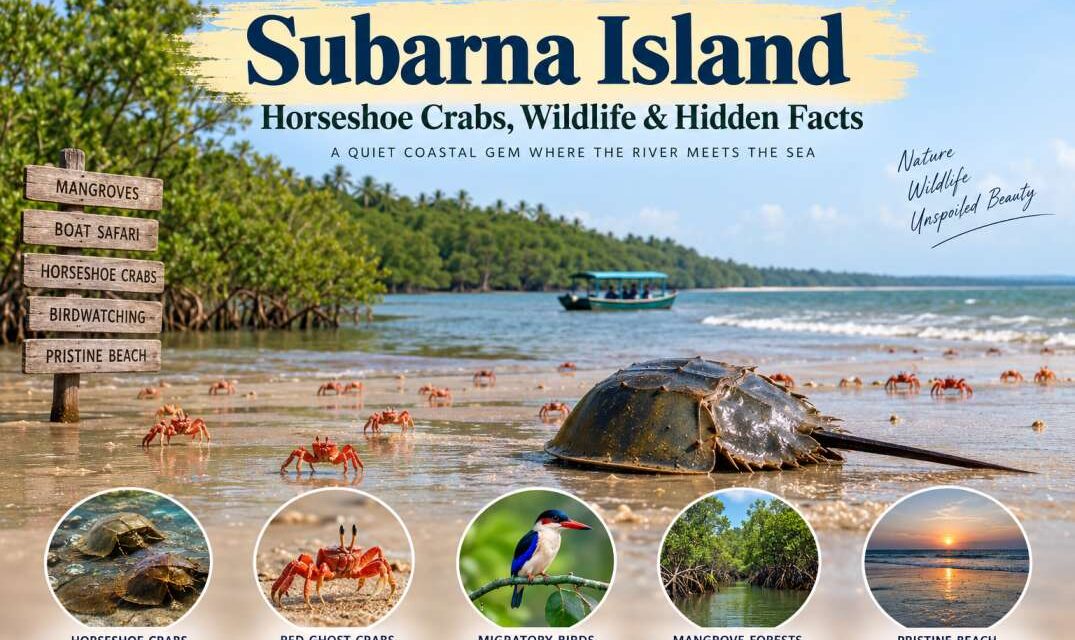
Subarna Island is a sandy beach inside the protected Bichitrapur Mangrove Sanctuary in Odisha. The shore changes shape with the tide, and the mix of river water, sea water, mangroves, mudflats, and sand creates a rich habitat for birds, crabs, and horseshoe crabs.
The island has a very different feel from Digha.
There are no shops, roads, hotels, or permanent buildings on the sand. You reach it by boat through the mangrove channels.
Horseshoe crabs are the main wildlife attraction. Red ghost crabs cover parts of the shore, and winter brings migratory birds to the area.
What Is Subarna Island?
Subarna Island is a sand beach at the mouth of the Subarnarekha River.
It sits inside the Bichitrapur Mangrove Sanctuary, where the river meets the Bay of Bengal.
The beach is part of an intertidal zone, so its shape and exposed land change with the water level. Thick mangrove growth surrounds the area, giving shelter to many coastal species.
The beach is known for:
- Horseshoe crabs
- Red ghost crabs
- Migratory birds
- Mangrove forests
- Mudflats
- Coastal wildlife
The source describes Subarna Island as an important habitat for horseshoe crabs that use the sand to lay eggs.
Why Subarna Island Feels So Different
The first thing you notice is the lack of noise.
Once the boat reaches the beach, there are no cars, loud music, or rows of commercial stalls.
You hear water moving through mangrove roots and waves breaking along the open shore.
The island sits between two very different water bodies. The Subarnarekha flows on one side, and the Bay of Bengal opens out on the other.
The Odisha Forest Department does not allow loud beach parties here. The protected area supports migratory birds, mangrove plants, and old marine species.
For birdwatchers, photographers, and nature-focused travelers, the quiet setting is a major part of the visit.
Horseshoe Crabs: The Main Attraction
Subarna Island is known for its horseshoe crab population.
The source names two species found around the Subarnarekha estuary:
- Indian horseshoe crab — Tachypleus gigas
- Mangrove horseshoe crab — Carcinoscorpius rotundicauda
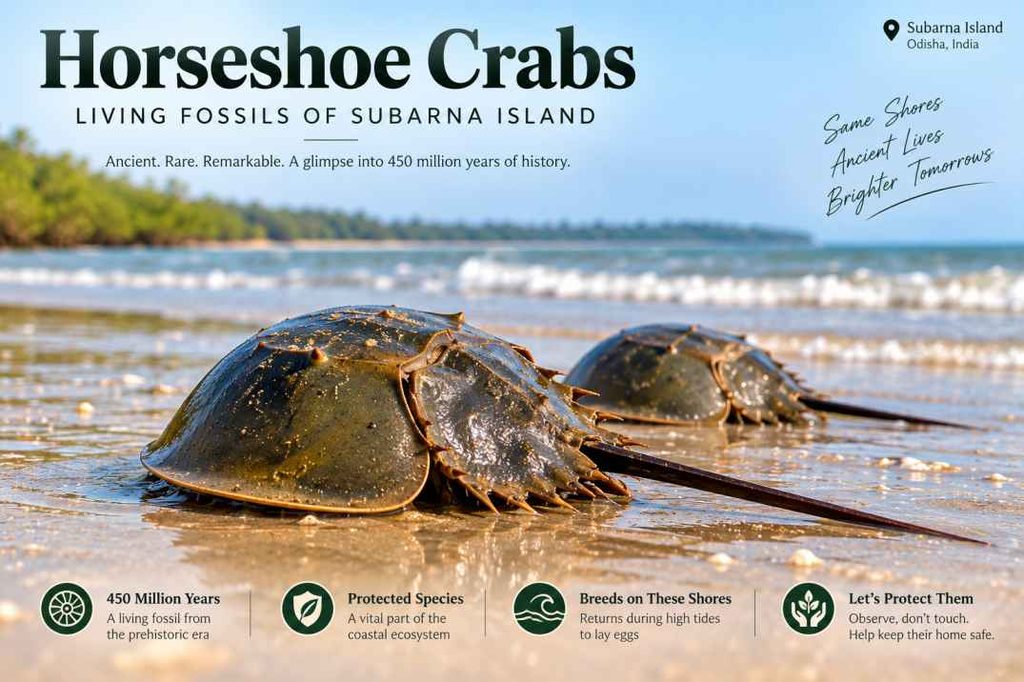
These animals are often called living fossils.
Their family line goes back more than 450 million years, long before dinosaurs appeared. Their basic body form has changed very little through geological time.
Despite the name, horseshoe crabs are not true crabs.
They belong to the subphylum Chelicerata, making them closer to spiders and scorpions than to common crabs.
Their hard shell protects the body, and the long tail, called the telson, helps them turn over after being flipped by waves.
Why Horseshoe Crabs Matter
Researchers study these animals because they have unusual biology and medical value.
The source notes that Asian horseshoe crabs have blue blood, similar to Atlantic horseshoe crabs used in biomedical testing.
The sheltered mix of river and sea water around the sandbar gives them suitable conditions for breeding and egg laying.
How to See Horseshoe Crabs Safely
Your best chance comes during special tide periods in late winter and spring.
The supplied guide points to full-moon and new-moon periods when the crabs come closer to the beach to mate and lay eggs.
Follow these rules:
- Never lift a horseshoe crab by its tail.
- Never remove a research tag from its shell.
- Give the animal space to move toward the water.
- Avoid flash photography.
The telson is important for movement and can be damaged if handled badly.
Other Wildlife at Subarna Island
Horseshoe crabs get the attention, but the intertidal habitat supports many other species.
Red Ghost Crabs
The beach can be covered with tiny red ghost crabs.
Their burrows appear across the wet sand and exposed mudflats.
These crabs feed on organic debris and help clean the beach.
They react quickly to movement and vibration. Step too close, and they disappear into their burrows.
Migratory Birds
Visit between November and February and the bird activity increases.
The source mentions:
- Black-capped Kingfishers
- Brahminy Kites
- Eurasian Curlews
- Black-rumped Flamebacks
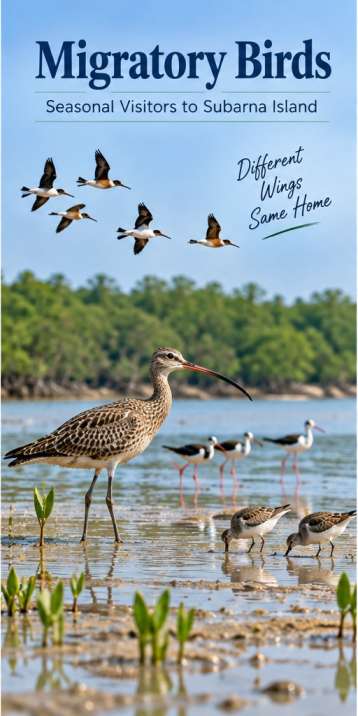
Some birds hunt over the water. Others feed along the mudflats.
Look toward the tree canopy too, since many birds rest in the mangrove branches.
The Mangrove Forest
You reach Subarna Island by boat through the Bichitrapur Mangrove Sanctuary.
Mangrove species such as Rhizophora mucronata and Avicennia alba help trap sediment, hold the shoreline together, and reduce the force of coastal storms.
Their roots create shelter for fish and other young marine life.
Wildlife and Why It Matters
| Wildlife | Role |
|---|---|
| Horseshoe Crabs | Important coastal species with value in biomedical research |
| Red Ghost Crabs | Feed on organic waste and help clean the beach |
| Migratory Birds | Feed on fish, insects, and mudflat organisms |
| Mangrove Trees | Hold sediment, protect the coast, and support young fish |
7 Hidden Facts About Subarna Island
1. The Beach Keeps Changing
The shoreline shifts with the tide.
During very low water, broad mudflats can appear. The beach area you see in the morning may look quite different later in the day.
2. The Subarnarekha Crosses Three States
The river’s name means “Line of Gold.”
It begins near Ranchi in Jharkhand, flows through West Bengal, and reaches the Bay of Bengal in Odisha.
3. It Is a Plastic-Free Zone
The source says the Forest Department maintains strict plastic rules here.
Visitors need to carry their waste back with them.
4. River Water Meets Sea Water
Subarna Island sits at an estuarine mouth.
The source describes a visible transition between muddy river water and greener sea water during calm conditions.
5. There Are No Permanent Buildings
The island has no houses, power lines, or regular water supply.
This is one reason it feels so remote.
6. Mangroves Store Carbon
Mangrove mud can hold large amounts of carbon.
The source notes that the low-oxygen soil under mangrove roots helps keep stored carbon from quickly returning to the air.
7. The Sand Looks Different From Nearby Beaches
The source contrasts Subarna Island with nearby Chandipur.
Subarna has loose, golden sand shaped by river and sea movement.
How to Plan a Subarna Island Trip
You cannot drive directly onto the island.
The trip starts at the Bichitrapur boating point, then continues by boat through the mangrove sanctuary.
Subarna Island Location
The source gives the boating point as:
21°34’30″N 87°22’30″E
For navigation, it advises using Bichitrapur Mangrove Nature Camp as the map destination rather than typing “Subarna Island” as the final stop.
Boat Ride to the Island
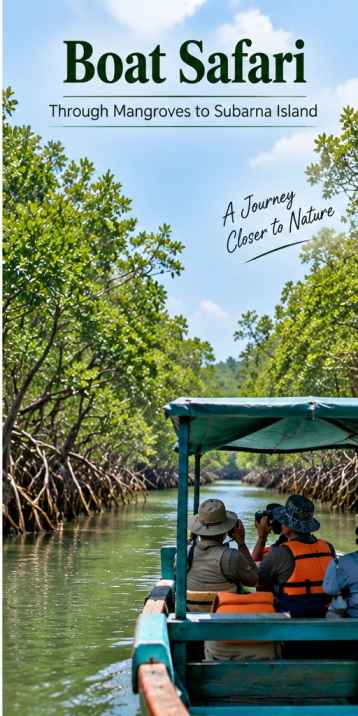
The source says the legal route uses official Eco-Tour Odisha boats from the Bichitrapur Mangrove Sanctuary.
The ride passes through narrow tidal creeks lined with mangrove trees.
Mudskippers and other small wildlife can appear along the muddy banks before the route reaches the open sea.
Subarna Island Tide Timings
Tide planning matters more here than a fixed clock time.
Boat movement depends on water depth.
When the tide falls too far, boats may not have enough depth to move through the shallow channels.
The supplied source recommends reaching the Khadibili boating point around 8:00 AM during the rising tide.
Before leaving your hotel, check a local tide chart for the Subarnarekha mouth or nearby Digha.
Subarna Island Boat Cost and Ticket Details
The source says the following rates were checked at the Khadibili counter in April 2026.
| Trip Detail | April 2026 Information |
|---|---|
| Boat cost | ₹1,200 |
| Boat booking | Whole boat |
| Capacity | 8 visitors + driver |
| Total duration | Around 1.5–2 hours |
| Island walk | Around 30–45 minutes |
| Booking point | Eco-Tour Odisha counter at Khadibili |
| Online booking | Not available |
| Life jackets | Required |
The boat is booked as a complete unit, so the cost can be split among your group.
How to Reach Subarna Island
From Digha
Digha is the easier starting point for most travelers.
The Bichitrapur entrance is about 15 km from New Digha.
The drive takes roughly 35–40 minutes.
A private auto for the trip, including waiting time, is listed around ₹600–₹800.
Budget Route
The source suggests taking a shared van or bus from Digha toward the Chandaneswar crossing for around ₹30.
From there, a local auto to the Khadibili boat point can cost around ₹100.
From Balasore
Bichitrapur is around 95 km from Balasore.
Follow the road toward Jaleswar, then continue toward Chandaneswar and follow signs for Bichitrapur.
By Train
The source lists these nearby railway stations:
- Digha: about 15 km
- Jaleswar: about 42 km
Best Time to Visit Subarna Island
The beach is exposed, quiet, and lightly developed, so weather can make or break your trip.
Winter: Late October to Early March
This is the most comfortable season.
Temperatures are listed around 15°C–25°C, and migratory birds are active.
For horseshoe crabs, the source recommends checking full-moon or new-moon dates in February and March.
Summer: April to June
Heat becomes strong by late morning.
The source says there is almost no shade on the sandy beach and recommends taking the 8:00 AM boat during summer visits.
Monsoon: July to September
The river can rise quickly, and sea conditions become rough.
The source says boat trips are usually stopped during the monsoon for safety.
What to Pack for the Boat Safari
There are no normal shops on Subarna Island.
Bring everything before the boat leaves.
Water
Carry at least 1 litre per person.
You cannot depend on buying drinking water after reaching the island.
Footwear
The boat may stop in muddy or shallow areas.
Wear water sandals, rubber footwear, or plastic clogs.
Avoid leather shoes and expensive sneakers.
Sun Protection
White sand and open water reflect strong sunlight.
Pack:
- Hat
- Dark sunglasses
- Sunscreen
- Light protective clothing
Camera Gear
Binoculars help with birdwatching.
A zoom lens is better for distant wildlife.
Offline Maps
Phone coverage becomes weak near the river.
Download the map before leaving your hotel.
Where to Stay Near Subarna Island
Bichitrapur Nature Camp
This government-run nature stay sits near the boat point.
It suits travelers who want an early start.
The source says staying here lets guests reach the boats ahead of visitors coming from Digha.
Talsari Beach
Talsari is about 8 km from the boat point.
It offers a quieter base with government accommodation and private stays.
New Digha
New Digha gives you more:
- ATMs
- Restaurants
- Internet access
- Hotel choices
The trade-off is the early drive to the boat point, which takes around 40 minutes.
Responsible Tourism Rules
Subarna Island is a sensitive habitat.
Keep your visit low impact.
Take Nothing From the Beach
Don’t collect shells, seeds, crab shells, or other natural material.
Carry your waste back to the mainland.
Keep Noise Low
Birds use the mangroves for rest and shelter.
Keep your phone on silent and avoid loud music or shouting.
No Drones Without Permission
Drone use over the park or island requires written permission from the Forest Department, according to the source.
Scientific and Conservation Sources
The supplied guide points readers toward several research and conservation sources:
- Zoological Survey of India: Research on horseshoe crab species such as Tachypleus gigas
- Eco-Tour Odisha: Nature-camp booking and park rules
- PubMed: Research on horseshoe crab biomedical testing
FAQs
Will My Phone Work on Subarna Island?
Signal can become very weak once you enter the forest route.
The source says visitors should expect to be offline during much of the two-hour boat trip.
Can I Take Photos?
Yes.
Regular photography is allowed and free.
Drone flights need written permission from the Forest Department.
When Can I See Horseshoe Crabs?
The source says they can be found in deeper water through much of the year.
Your better chance of seeing them on the beach comes in late February and March, around full-moon or new-moon high tides.
Can I Swim at Subarna Island?
No.
The meeting point of river and sea creates shifting currents and sand.
The source says the Forest Department strictly prohibits swimming here.
Are There Toilets on the Island?
No.
Use the toilets at the Khadibili boat counter before departure.
Do Boats Run at Low Tide?
No.
Very low water can leave the wooden boats stuck in the mud.
Check the tide chart before your visit and aim for a period when the water is rising or already high.
Final Words
Subarna Island is a very different coastal trip from Digha.
The attraction isn’t a long line of shacks or busy beach activity.
It is the mangrove boat ride, the shifting intertidal sand, the red ghost crabs, winter birds, and the chance to see horseshoe crabs in their natural habitat.
The key to a good visit is timing.
Check the tide. Reach early. Carry your own water. Wear footwear that can handle mud. Keep noise low. Leave every piece of waste behind with you.
For a simple plan, stay near Bichitrapur or Talsari, take the morning boat, spend 30–45 minutes on the island, and return before the afternoon heat builds.
