
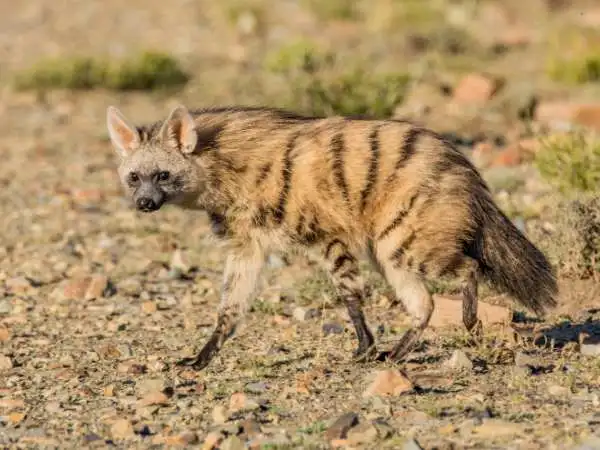
The aardwolf animal sits in a strange corner of the animal world. It looks like a small striped hyena. It belongs to the hyena family. Yet it doesn’t hunt large prey, doesn’t scavenge carcasses, and doesn’t behave like what people imagine when they hear the word “hyena.” That disconnect creates confusion. People see the body and expect aggression. They hear the name and assume danger.
In reality, the aardwolf is one of the least threatening carnivores in Africa. Its life revolves around insects, quiet nights, and avoiding conflict. Most people have never seen one in the wild, and many who have mistake it for something else entirely.
This blog breaks down everything about the aardwolf animal, including are aardwolf dangerous, is an aardwolf a hyena, what an aardwolf puppy looks like, the true aardwolf diet, unusual aardwolf teeth, realistic aardwolf size, whether aardwolf are endangered, and the correct aardwolf scientific name. The goal here isn’t hype. It’s clarity.
What Is an Aardwolf Animal
An aardwolf is a small, nocturnal mammal native to eastern and southern Africa. Despite its resemblance to hyenas, its behavior and diet set it apart from its larger relatives. The name “aardwolf” comes from Afrikaans, meaning “earth wolf,” a reference to its insect-eating habits rather than predatory behavior.
The aardwolf lives a quiet life. It avoids confrontation. It feeds almost exclusively on termites. It rarely interacts with humans and causes no damage to livestock.
Most fear around it comes from mistaken identity.
Also Read : – Cabrones Meaning, How the Word Is Really Used, and Why Context Changes Everything
Aardwolf Scientific Name
The aardwolf scientific name is Proteles cristata. This name places it within the hyena family, Hyaenidae, even though its lifestyle differs sharply from spotted, striped, or brown hyenas.
The classification surprises many people. Genetics, not behavior, determine family ties. Evolution split the aardwolf off early, allowing it to specialize in a niche that no other hyena occupies.
Is an Aardwolf a Hyena
The question is an aardwolf a hyena has a clear answer.
Yes, the aardwolf is a hyena. It shares ancestry with modern hyenas. However, it represents a specialized branch of that family. Over time, it adapted away from bone-crushing jaws and scavenging behavior.
So while it belongs to the hyena family, it does not behave like what most people think of as a hyena.
Why Aardwolves Look Like Small Hyenas
Aardwolves have:
- Sloped backs
- Upright ears
- Striped coats
- Short muzzles
These features resemble other hyenas. The similarity often leads to fear-based assumptions. Behavior tells a very different story.
Evolution kept the body shape. Diet reshaped everything else.
Aardwolf Size: Smaller Than You Expect
The aardwolf size often surprises people.
Adult aardwolves typically measure:
- Body length: about 55 to 80 cm
- Shoulder height: around 40 to 50 cm
- Weight: roughly 7 to 10 kg
They are far smaller than spotted hyenas. Their size reflects their insect-based diet. They don’t need bulk or power.
Their build supports efficiency, not dominance.
Also Read : – Continuous vs Batch Processing in Plant Operations: Which Is More Efficient?
Aardwolf Diet: Almost Entirely Termites
The aardwolf diet defines the animal more than anything else. Unlike other hyenas, aardwolves do not hunt mammals or scavenge carcasses. They specialize in eating termites, particularly harvester termites.
An aardwolf can consume tens of thousands of termites in a single night.
This diet shapes everything about the species.
How Aardwolves Eat Termites
Aardwolves use long, sticky tongues to lap up termites. They target specific termite species that emerge above ground at night. This timing matches the aardwolf’s nocturnal habits perfectly.
They do not dig aggressively into mounds. They feed with precision and patience.
That feeding style minimizes conflict and energy use.
Aardwolf Teeth: Built for Insects, Not Bones
The aardwolf teeth are one of its most unusual features. Compared to other hyenas, aardwolves have:
- Reduced molars
- Weak jaw muscles
- Teeth unsuitable for crushing bone
This reflects their insect diet. They don’t need powerful bites. They don’t tear flesh. Their teeth play a minor role compared to the tongue.
This is one of the clearest signs of their specialization.
Why Aardwolves Don’t Scavenge
Scavenging requires strength, aggression, and competition. Aardwolves lack all three by design. They evolved into a niche with little competition. Termites offer a stable food source with minimal risk.
Avoiding carcasses keeps aardwolves out of dangerous situations.
Are Aardwolf Dangerous
The question are aardwolf dangerous comes up often because of their hyena connection.
The answer is no.
Aardwolves pose no danger to humans. They do not attack people. They do not hunt livestock. They do not defend territory aggressively. If threatened, they flee.
In extreme cases, they may hiss, growl, or release a foul-smelling secretion from anal glands as a deterrent. Physical attacks remain rare and mild.
Also Read : – Yellow Spring Road Japan: A Mysterious Journey Through Nature
Why Aardwolves Are So Non-Aggressive
Aggression offers no advantage to aardwolves. Their food doesn’t fight back. Their survival depends on avoidance, not dominance.
Natural selection favored calm, cautious behavior.
That calm nature often gets overlooked.
Aardwolf Puppy: What Young Aardwolves Are Like
An aardwolf puppy is born blind and helpless, like many mammals. Cubs stay in underground burrows for the first weeks of life. Parents show a level of care not always associated with hyena relatives.
Both parents may guard and care for the young. This cooperation increases survival chances.
As they grow, pups gradually learn foraging routes and termite patches.
Social Structure Around Aardwolf Pups
Aardwolves are mostly solitary, but family bonds matter during early life. Cubs may stay with parents for several months. During this time, adults remain protective and alert.
This brief social phase fades as the young mature.
Where Aardwolves Live
Aardwolves inhabit:
- Grasslands
- Savannas
- Semi-arid regions
They prefer areas rich in termites. Dense forests and deserts don’t suit them well.
Their distribution depends almost entirely on insect availability.
Aardwolf Activity Patterns
Aardwolves are nocturnal. They emerge after sunset and spend the night feeding. Daytime hours are spent resting in burrows or shaded areas.
This schedule reduces exposure to predators and heat.
Night defines their world.
How Aardwolves Defend Themselves
Defense relies on avoidance first. If cornered, aardwolves may:
- Raise their mane to appear larger
- Growl or hiss
- Release strong-smelling secretions
Physical combat remains a last resort.
Their goal is escape, not victory.
Are Aardwolf Endangered
The question are aardwolf endangered deserves a careful answer.
Aardwolves are currently listed as Least Concern in many regions. That means they are not considered endangered at a global level.
However, local populations face threats.
Threats to Aardwolf Populations
Major threats include:
- Habitat loss
- Agricultural expansion
- Pesticide use reducing termite numbers
- Road accidents
Because aardwolves depend heavily on termites, changes in insect populations affect them directly.
Why Pesticides Matter So Much
Termites are often targeted as pests. Large-scale termite control reduces aardwolf food supply. Even if habitat remains, food scarcity can drive population declines.
Indirect effects matter more than direct hunting.
Also Read : – What age is appropriate to read Demon Slayer manga?
Human Interaction With Aardwolves
Most people never see an aardwolf. When encounters happen, they are brief. Aardwolves do not approach humans. They do not raid farms.
In some areas, they are mistakenly killed due to confusion with hyenas. Education helps reduce this problem.
Aardwolf vs Other Hyenas
Comparing aardwolves to other hyenas highlights how different they are.
Spotted hyenas:
- Hunt large prey
- Live in clans
- Show high aggression
Aardwolves:
- Eat insects
- Live mostly alone
- Avoid conflict
Same family. Completely different lives.
Why Evolution Took the Aardwolf This Way
Termites represent a massive, renewable food source. Few mammals specialize in exploiting them. Once aardwolves adapted to this niche, competition dropped sharply.
Specialization paid off.
Are Aardwolves Useful to Ecosystems
Yes. Aardwolves help regulate termite populations. Their feeding prevents overpopulation and supports balance in grassland ecosystems.
They play a quiet but important role.
Can Aardwolves Be Kept as Pets
No. Aardwolves are wild animals. Their diet, behavior, and nocturnal habits make them unsuitable for captivity outside professional conservation settings.
Attempts to keep them as pets fail and harm the animal.
Also Read : –
Myths About the Aardwolf Animal
Several myths persist.
- They do not hunt sheep
- They do not attack humans
- They are not aggressive scavengers
- They are not failed hyenas
Each myth comes from appearance, not reality.
Why Aardwolves Are Rarely Seen
Nocturnal habits, shy behavior, and quiet movement make aardwolves hard to spot. Even in areas where they are present, sightings remain uncommon.
Scarcity in sight does not equal scarcity in numbers.
Conservation Outlook for Aardwolves
As long as grasslands remain and termite populations stay stable, aardwolves should persist. Protecting insect diversity indirectly protects them.
Small actions matter.
What Makes the Aardwolf Unique
The aardwolf stands out because it breaks expectations. It looks like a predator but lives like an insect specialist. It belongs to a feared family but behaves gently.
That contradiction defines it.
Also Read : – Beginner’s Guide to Wingfoil: Common Mistakes and How to Avoid Them
FAQs
Are aardwolf dangerous
No, aardwolves pose no danger to humans.
Is an aardwolf a hyena
Yes, it belongs to the hyena family but behaves very differently.
What do aardwolves eat
Their diet consists almost entirely of termites.
Are aardwolf endangered
They are not globally endangered but face local threats.
What is the aardwolf scientific name
Proteles cristata.
Final Words
The aardwolf animal suffers from mistaken identity more than any real threat. It looks fierce but lives quietly. It belongs to the hyena family but rejects the hyena lifestyle. It survives through specialization, not strength. Once you understand the aardwolf, fear fades fast, replaced by respect for one of nature’s most unusual and misunderstood mammals.
