
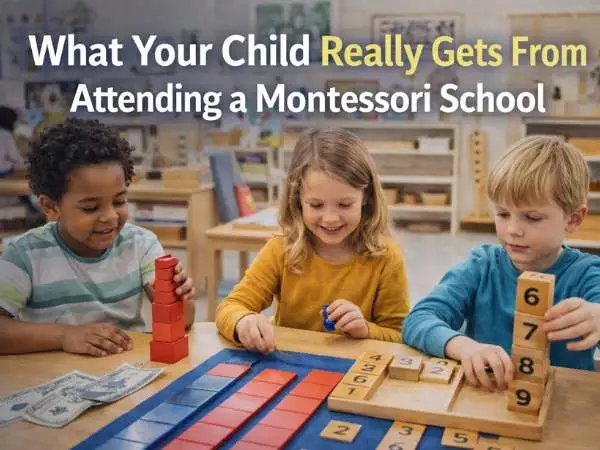
Let’s be honest: picking a school for your little one feels a lot like picking out shoes for a kid with fast-growing feet—nothing ever seems to fit quite right, and you’re constantly worried about comfort and long-term impact. If you’ve ever wondered what actually happens inside a Montessori classroom (besides kids handling tiny furniture and mysterious wooden beads), you’re not alone. So, here’s a real-world look at what your child learns and experiences if you choose the Montessori path.
Independence, Right From Day One
There’s this moment in a Montessori classroom where a kid, maybe three or four, slowly pours her own glass of water with laser focus—nobody rushing her, nobody “fixing” anything. That’s textbook Montessori. The whole approach is built around encouraging kids to do things for themselves. Everything in the room is kid-sized for a reason. Your child gets to make choices, manage their own materials, and even clean up their own messes (sometimes with a little coaxing, but they get there!).
And honestly, you’ll probably notice your child taking more responsibility at home too—maybe it’s putting on shoes solo, maybe it’s folding socks. These day-to-day wins build confidence quietly but powerfully.
Learning at Their Own (Totally Unique) Pace
One of the loveliest things about authentic Montessori schools is that they really see kids as individuals. There’s no “race to finish the worksheet” or pressure to be exactly where everyone else is. If your kid is deep into dinosaurs or suddenly obsessed with patterns, the teacher (they call them “guides,” which is actually kind of perfect) helps them find work that stretches their curiosity.
Lessons happen one-on-one or in small groups. Kids repeat activities as much as they need to. No rush, no boredom, just steady learning. For parents who always felt boxed in or overlooked in their own school days, this approach is a breath of fresh air.
Community and Collaboration—With Room to Be Yourself
Contrary to the myth, Montessori isn’t just “do whatever you want.” There’s real structure, but it’s built on respect for children as whole people. Older students often help teach the younger ones, and everyone learns how to share space and tools. You’ll probably hear stories about your child comforting a friend or patiently waiting for a turn with the popular puzzle.
Kids also spend a lot of time figuring out how to solve problems kindly—sometimes with adult help, sometimes on their own. The classroom feels calm, almost like a well-run family kitchen at dinner time. I remember visiting a Montessori room once; the peace was so real, you could almost hear the plants growing.
Hands-On, Sensory Learning That Actually Sticks
If you’re picturing endless workbooks, think again. Montessori lessons come wrapped in all five senses. Math isn’t just numbers on a chalkboard—it’s beads you can touch. Science comes through pouring, sorting, and real experiments. Writing starts with tracing sandpaper letters and spills over into stories about what truly matters to the child.
It’s this hands-on approach that leaves a mark—kids hold onto concepts because they’ve explored them in real, concrete ways.
At the end of the day, Montessori is about raising self-reliant, kind, and curious humans who know how to ask questions and chase their own answers. And honestly, isn’t that what we all hope for our kids?
